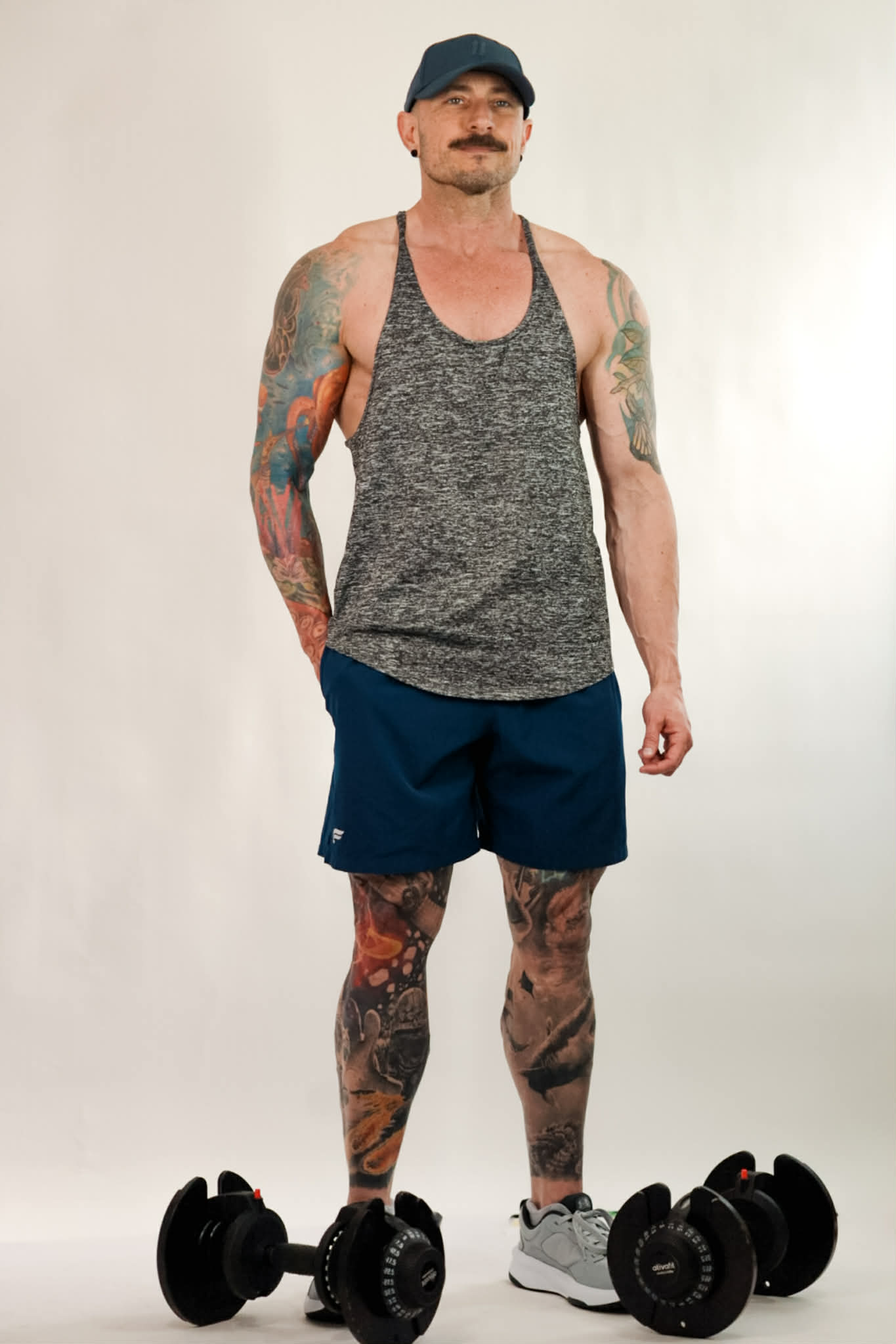
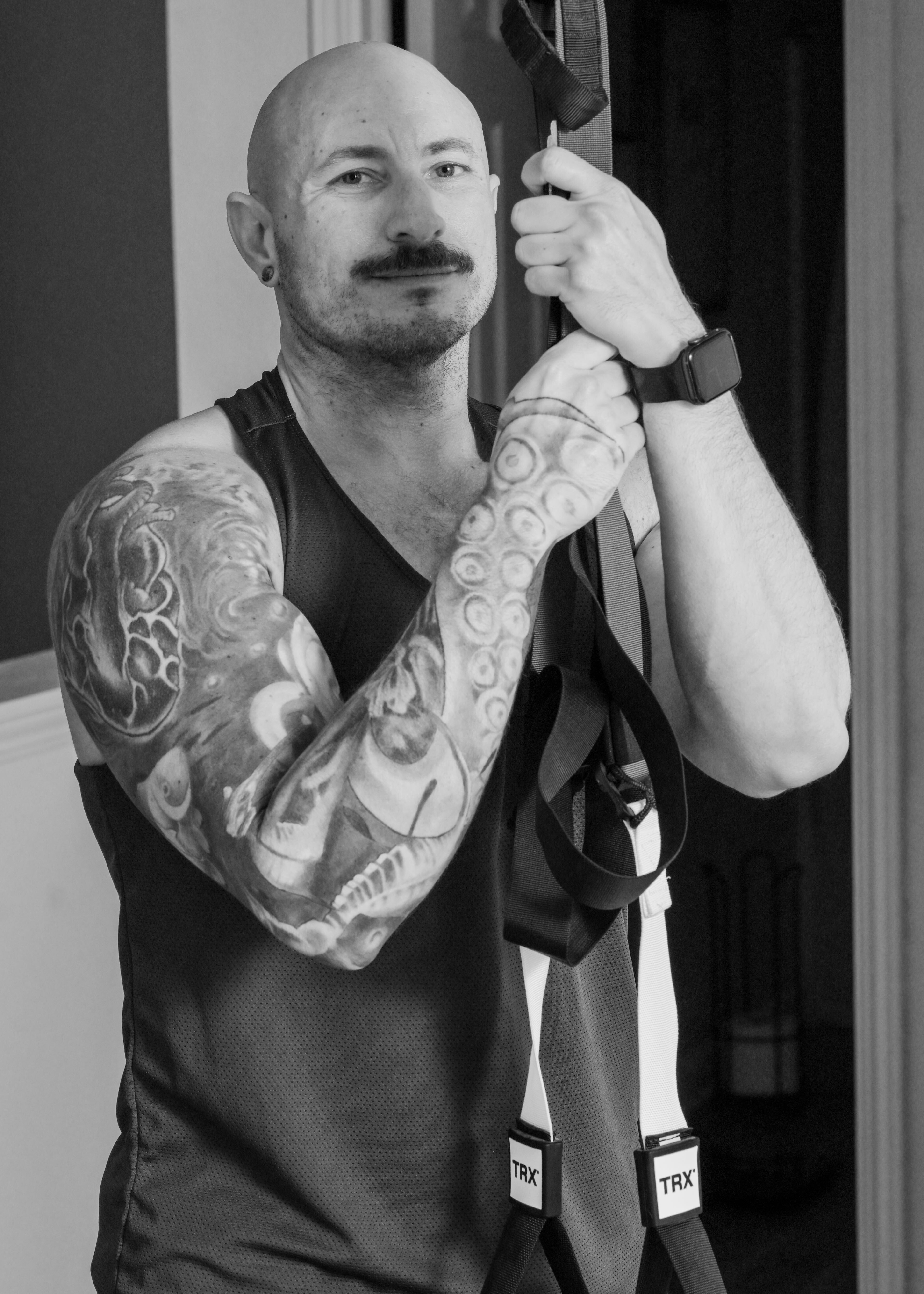
Meet Trey Sheidler.
I've been coaching folks in fitness and nutrition since 2011. I started my own transition when I was 27. Now I'm 43, married to my trans wife, living in Whiteland, Indiana, and still learning new things about how to care for my body.
This space was built for you.
I've been coaching people in fitness and nutrition for over 15 years. Got certified back in August of 2011. Spent years training people in gyms, then moved everything online after the pandemic to make it more accessible. Especially for people like us.
Before that, I served in the United States Air Force. The discipline I built there shaped how I coach, but so did everything that came after. The burnout. The obsession. The dysphoria. The weeks I couldn't bring myself to open the workout app. All of it.
I also spent years in a complicated relationship with food. Binge eating disorder isn't something people talk about enough in fitness spaces, partly because fitness culture tends to treat eating issues as a character flaw rather than something real that happens to real people. I lived it. I've lost over 50 pounds and I've been on both sides of what it feels like to be at war with your own body. I'm mostly on the other side of that now. Mostly, because I think that kind of honesty matters more than pretending I've arrived somewhere perfect.
What I found on the other side wasn't a perfect relationship with food or a body I never second-guess. It was balance. A version of myself that's stronger, more grounded, and genuinely at peace with the process of taking care of myself. That's what I want to help other people find.
That same drive to build things that didn't exist for people like us is what led me to found Mystical Transcendence, a queer-owned supplement line built around the same values as this coaching practice. No gimmicks, no before-and-after culture, no products designed to make you feel like you're not enough without them. Just supplements that actually support the work you're already doing.
I started my own transition when I was 27. That changed everything about how I understand bodies, movement, and what it actually means to take care of yourself. The fitness industry wasn't built with trans people in mind, and I spent years feeling the gap between what was out there and what people like us actually needed.
So I built what I wish existed. A coaching space where your identity, your history, and your body aren't obstacles to work around. They're the starting point.
Now I work with queer and trans folks, plus anyone who's felt left out or overlooked in traditional fitness spaces, who are ready to move, eat, and live in a way that actually feels good. With compassion, curiosity, and care. No shame. No extremes.
Not a bootcamp. Not a shred challenge.
This is coaching that fits your real life. Here's what that actually looks like.
We Start With Your Life
Not just your goals. Your actual life. Your schedule, your history, your relationship with food and movement. That's what the plan gets built around.
Plans That Make Sense for You
Not around some idea of what you "should" be doing. Your plan reflects who you are, how your body works, and what's actually sustainable for you long-term.
Showing Up Over Being Perfect
Some weeks you hit every workout. Some weeks you're just trying to drink more water and sleep better. Both count. Progress doesn't require perfection.
Adjustments as You Go
Your plan evolves with you. Check-ins, tweaks, feedback. The plan you have on day one isn't the plan you're running on day 90. That's by design.
Identity-Informed Coaching
HRT, transition stage, dysphoria, body image, all of it is part of the conversation when it's relevant. You don't have to explain yourself or educate your coach mid-session.
The Whole Person
I don't want you to obsess over fitness. I want you to feel better in your body so you can go live your life. The goal is always more life, not more fitness.
Some stuff about me.
- 🏋️ I love deadlifts. Hate burpees. This will never change.
- ☕ I drink my coffee with fake sugar and almond milk. Yes, I know. No, I don't want to hear about it.
- 😴 I'm obsessed with good sleep. I will absolutely remind you to stretch before bed.
- 🐕 I have a dog and two cats. They are all needy in different and specific ways.
- 💍 Married to my trans wife. Whiteland, Indiana. Yes, it's a real place.
- ✈️ Air Force vet. The discipline stuck. Most of the rest didn't.
- 📊 I've been the person obsessed with macros. I've been burned out. I've overtrained. All of that made me a better coach.
- 🚶 Some days I train hard. Some days I go for a walk and call it good. Both are valid.
Why Transform Fitness?
Because most fitness spaces weren't built for people like us.
Because trans bodies deserve better than before-and-afters.
Transformation isn't about shrinking yourself to fit an ideal. It's about feeling stronger, more capable, and more at home in your body, whatever that looks like for you.
Because fat folks, neurodivergent folks, and trauma survivors deserve real support.
Fitness spaces have historically been hostile to a lot of us. This one isn't. Full stop.
Because movement can be care, not punishment.
Most fitness culture treats exercise as penance for eating or as a way to earn your body. That's not what we're doing here. Movement is something you do for yourself, not to yourself.
Because you shouldn't have to educate your coach.
You shouldn't have to explain your identity, your pronouns, or your transition before you can get help with your deadlift. That's the baseline here, not a feature.
Ready to work together?
Whether you want full 1:1 coaching, a self-paced program, or just want to start with the community, there's a path here that fits where you are right now.